
Farm and Agriculture Security Cameras: Power, Range and Deployment (2026)
Specifying farm security cameras: power options across barns and fields, working range versus pixel density, animal and weather resilience, 4G versus point-to-point links, and a field-ready checklist.
Key Points for Buyers
- Farms are a distance problem first: detection range is not identification range
- Split the site into mains, solar, battery-swap and link zones before choosing products
- In livestock areas human-shape filtering matters more than resolution
- Individual 4G beats long cable runs beyond about 100 metres
- Lightning surge protection is a farm-specific requirement for long copper links
- Farms are a distance problem before they are a camera problem. Most disappointment comes from expecting identification at 80 metres from a lens that identifies at 15.
- Power splits the site in two: barns and sheds have mains; gates, fields and water points do not.
- Animals trigger PIR constantly, so human-shape filtering matters more than resolution in livestock areas.
- 4G per camera beats long cable runs beyond about 100 metres; point-to-point links pay off only for clusters of cameras.
- Deterrence at a farm gate is a lighting problem as much as a camera problem.
Agricultural buyers usually start with one camera at a gate and end up wanting the whole yard. The gap between those two states is where most projects fail: the second and third camera are 200 metres from the first, there is no power there, and the field of view that looked fine in a product photo shows a vehicle as a grey rectangle.
This guide sets out the four variables that decide a farm deployment: power zoning, working range, animal behaviour and the link between cameras.
1. Power zoning: split the farm before choosing products
| Zone | Examples | Power reality | Typical choice |
|---|---|---|---|
| Mains zone | Barn, milking parlour, workshop, grain store | Mains with occasional outages | Mains WiFi or PoE, plus UPS where recording matters |
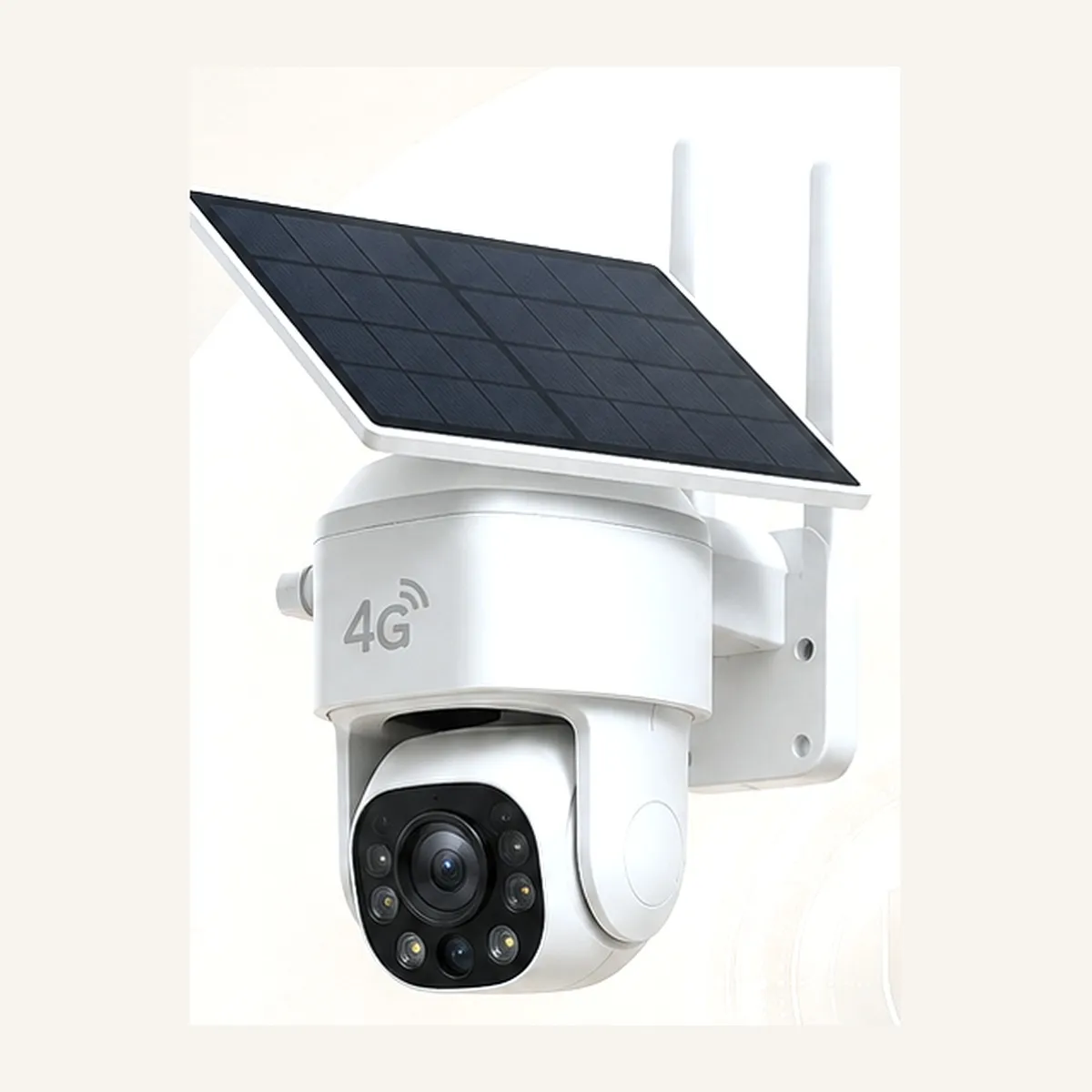
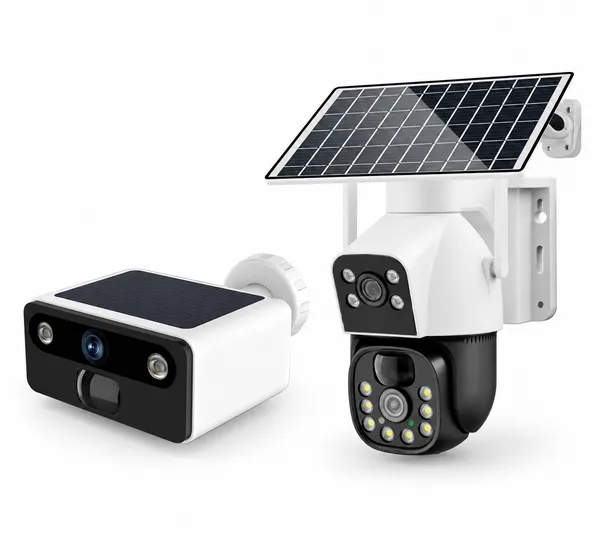
| Solar zone | Yard gate, field entrance, water trough, remote shed | No mains; sun may be obstructed in winter | 4G solar with battery sized for the worst month |
| Battery swap zone | Temporary pens, seasonal calving areas | No mains, panel not practical | Battery cameras with a scheduled swap routine |
| Link zone | Cluster of cameras at one remote building | One power point, several cameras | Local WiFi or PoE plus one 4G uplink |
Drawing these four zones on a farm map before ordering is the single highest-value hour in the project.
2. Working range: identify, detect, or just see something happened
Range claims are usually detection ranges. Buyers hear them as identification ranges. The difference is a factor of three or more.
| Purpose | What it needs | Practical consequence |
|---|---|---|
| Detect — something moved | A few pixels on target, any light | Long range is achievable with a wide lens and IR |
| Recognise — person or animal | Enough pixels for shape and gait | Roughly a third of the detection distance |
| Identify — face, plate, marking | Dense pixel coverage, stable light, good angle | Roughly a third again; usually needs a zoom lens or a closer mount |
3. Detection in livestock areas
- PIR sees warm bodies. Cattle, sheep and dogs trigger it continuously; a night of alerts trains the owner to ignore the app.
- Human-shape filtering is the deciding feature, not resolution. Confirm it works in low light and with animals in frame.
- Schedule zones matter more than at a house. Exclude paddocks from alerts during turnout, keep the yard and gate included.
- Radar-based detection handles slow movement better and is worth asking about where vehicle approach matters more than people.
- Two-way audio is useful for moving animals away from a gate, but only if the speaker is loud enough outdoors.
4. Linking cameras across a farm
| Option | Works when | Limits |
|---|---|---|
| Individual 4G cameras | Few units, spread out, no line of sight | One SIM and plan per unit; management overhead |
| Local WiFi + one 4G router | Cluster within 100 m, power available | WiFi does not cross steel barn walls or dense trees |
| Point-to-point wireless link | Two buildings with line of sight, several cameras each | Needs alignment, power at both ends, weatherproofing |
| Cable (fibre or copper) | Buildings close, trenching already happening | Trench cost; copper limited by distance and lightning risk |
5. Weather, animals and physical resilience
- Mount above animal height. Cattle rub against anything at shoulder level; a camera at 2 m becomes a scratching post.
- Consider birds. Nests in housings and droppings on lenses are common; a small hood helps.
- Dust and pollen reduce image quality faster than rain; plan cleaning twice a year minimum.
- Cold nights cut battery capacity; check the low-temperature rating, especially for winter calving season.
- Direct sun on a dark housing can push a camera into thermal throttling in summer.
6. Field checklist
- Farm map marked with the four power zones.
- Purpose stated per camera: detect, recognise, or identify.
- Pixel density checked at the actual distance, not the range claim.
- Human-shape filtering tested with animals in frame at night.
- Alert zones drawn to exclude paddocks.
- Link method chosen per cluster, with line of sight verified.
- Solar sized for the worst month at that latitude.
- Mounting height above animal reach, with a hood or shelter.
- Surge protection on any long copper run.
- Cleaning and battery-swap routine assigned to a named person.
Frequently asked questions
How far can a farm camera actually see at night?
IR illumination falls off sharply. Most cameras that claim 30–50 m of night range produce usable images at half that for recognition, and identification needs the subject closer again. Decide what you need to do with the footage — see that something happened, recognise a person, or read a plate — then choose the lens and the mounting point for that.
Do farm cameras need internet at all?
Only if you want remote viewing or cloud storage. Local recording to SD or an NVR keeps working without internet, which matters on sites where the 4G signal is unreliable. Many farms run local recording with a 4G uplink only for notifications.
What about cameras in unheated barns in winter?
Check the operating temperature range rather than assuming. Battery cameras derate in cold; mains cameras with heaters or a suitable rating cope better. For calving sheds used at night in winter, mains power plus a rated housing is usually the safer specification.
Can one 4G plan cover several farm cameras?
Yes, if they share a local router. The plan must then be sized for the combined upload of all cameras, and the router needs power and a dry location. Individual SIMs are simpler but multiply the monthly cost and the admin.
Do I need a different camera for a poultry or dairy shed?
Indoor agricultural buildings bring humidity, ammonia and dust. Sealing and housing material matter more than resolution. Confirm the IP rating and ask specifically about the atmosphere in the building — a shed that is washed down daily is a different environment from a grain store.
Planning a farm deployment?
Send us a sketch of the yard with gates, barns and field entrances marked. We will come back with a power zoning plan, the range you actually get at each point, and the link method between clusters.
Plan a farm layout →Related reading: Solar and battery sizing · Construction site deployment · PIR vs AOV detection · All buying guides