
Battery vs Solar vs Wired Security Cameras: What Distributors Should Stock (2026)
Compare battery, solar and wired security cameras by installation friction, power budget, RMA profile and sell-through — and how to build a stock mix that does not strand capital.
Key Points for Buyers
- Battery sells on installation speed, solar on site independence, wired on reliability
- Cost per installed unit differs from cost per box by the labour line
- Battery and solar share accessories; wired shares almost nothing with either
- Battery returns are power complaints; wired returns are connector and PoE faults
- Depth in two architectures beats tokens in three
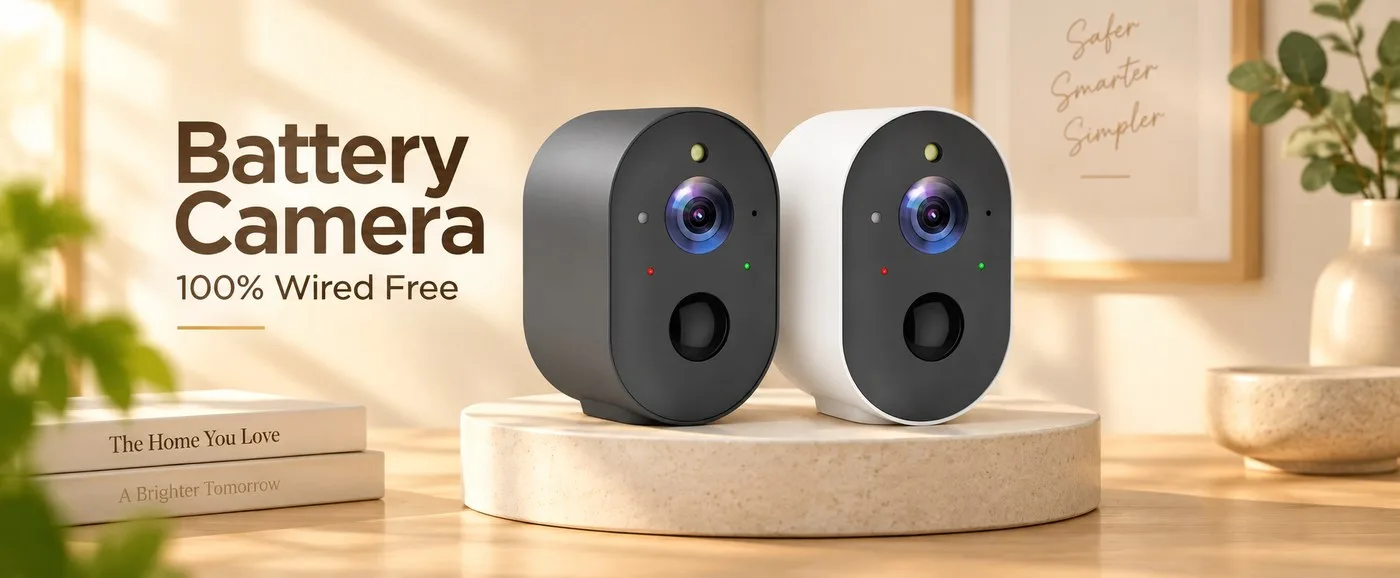
- Three architectures, three different businesses. Battery sells on installation speed, solar on site independence, wired on reliability — each attracts a different channel.
- Stock mix is a cash question, not a spec question. What strands capital is the SKU that sits because the installer cannot reach a power point.
- Battery and solar share accessories; wired does not. A mixed catalogue with no shared accessories doubles your dead-stock risk.
- The RMA profile differs by type. Battery returns are usually power and charging; wired returns are usually connectors and PoE negotiation.
- Start narrow, prove sell-through, then widen. One strong SKU per architecture beats five variants nobody reorders.
Distributors rarely lose money on the camera they chose badly. They lose it on the camera they chose well and stocked too deep, three months before the channel shifted to a different architecture. The comparison that matters is not which camera is technically better — it is which camera your channel can install, support and reorder without friction.
This guide compares the three architectures on the variables that decide reorders: installation friction, power budget, accessory overlap, RMA profile and channel fit. It finishes with a starting mix we would recommend to a distributor entering the category.
1. The three architectures side by side
| Dimension | Battery (wire-free) | Solar (4G or WiFi) | Wired (PoE / NVR) |
|---|---|---|---|
| Power source | Rechargeable lithium pack, periodic manual recharge | Panel plus battery buffer, self-sustaining in daylight | PoE from switch or NVR, continuous |
| Installation effort | Lowest — mount and pair | Low to medium — mount, orient panel, check sun path | Highest — cable runs, switch capacity, terminations |
| Recording model | Event-triggered, sleep between events | Event-triggered, or AOV low-frame continuous | Continuous, 24/7 |
| Typical buyer | Homeowner, small retail, DIY | Farm, construction, remote site, off-grid rental | Commercial, project, installer-led residential |
| Maintenance event | Recharge or swap the pack (seasonal) | Clean the panel, verify charge behaviour | Almost none until a cable or injector fails |
| Failure mode that hurts | Battery ageing in year two | Under-sized panel through a rainy week | Water in a connector, PoE budget overrun |
| Installer skill required | Basic | Basic to intermediate | Intermediate to advanced |
Table 1 — The architectures differ more in installation economics than in image quality.
2. Where each type fails in the field
Every architecture has a characteristic failure that your support desk will see repeatedly. Knowing it in advance changes what you stock as spares and what you write in the listing.
Battery: the second winter
A lithium pack that performs in month one can lose a third of its usable capacity after 300–500 cycles, and cold weather cuts capacity further. If the listing promises "180 days standby", the first warranty claim arrives in the season when standby halves. Stock the pack as a service part, and state the cycle expectation in the listing.
Solar: the under-sized panel
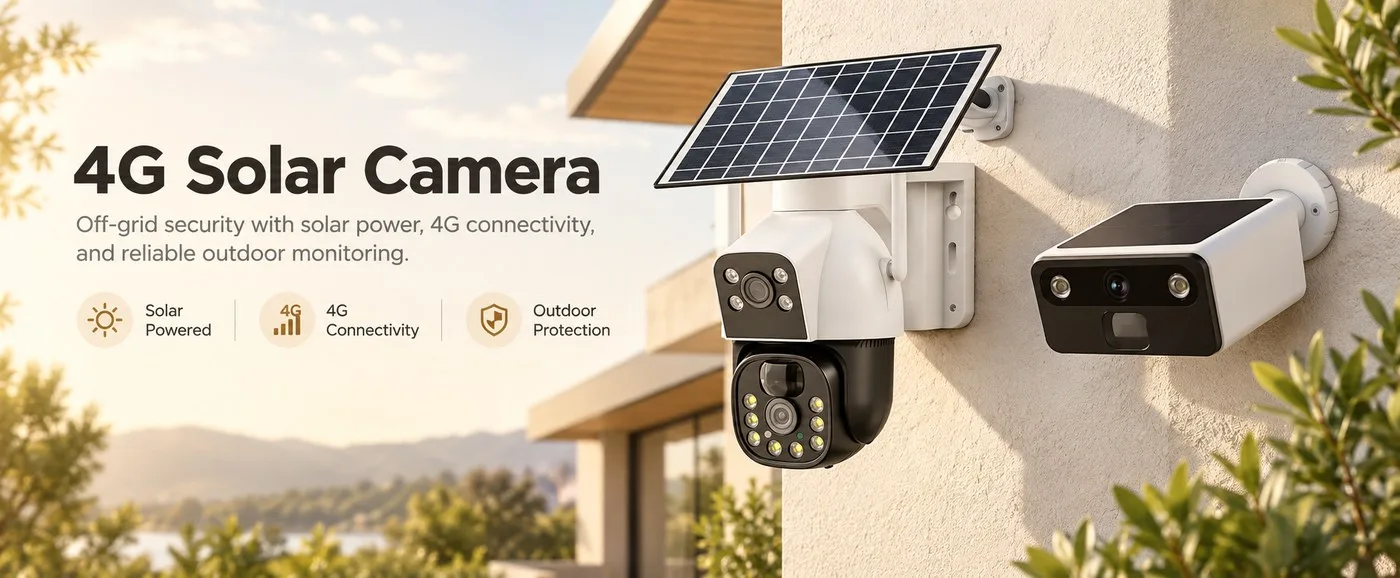
Solar units fail not because the panel is broken but because the energy budget was calculated for a sunny month. A camera that records 40 events a day in a market with a three-month rainy season needs panel and battery headroom, not a bigger sticker. Ask for the idle current, the event current and the assumed daily recording hours before you commit to a container.
Wired: the connector and the PoE budget
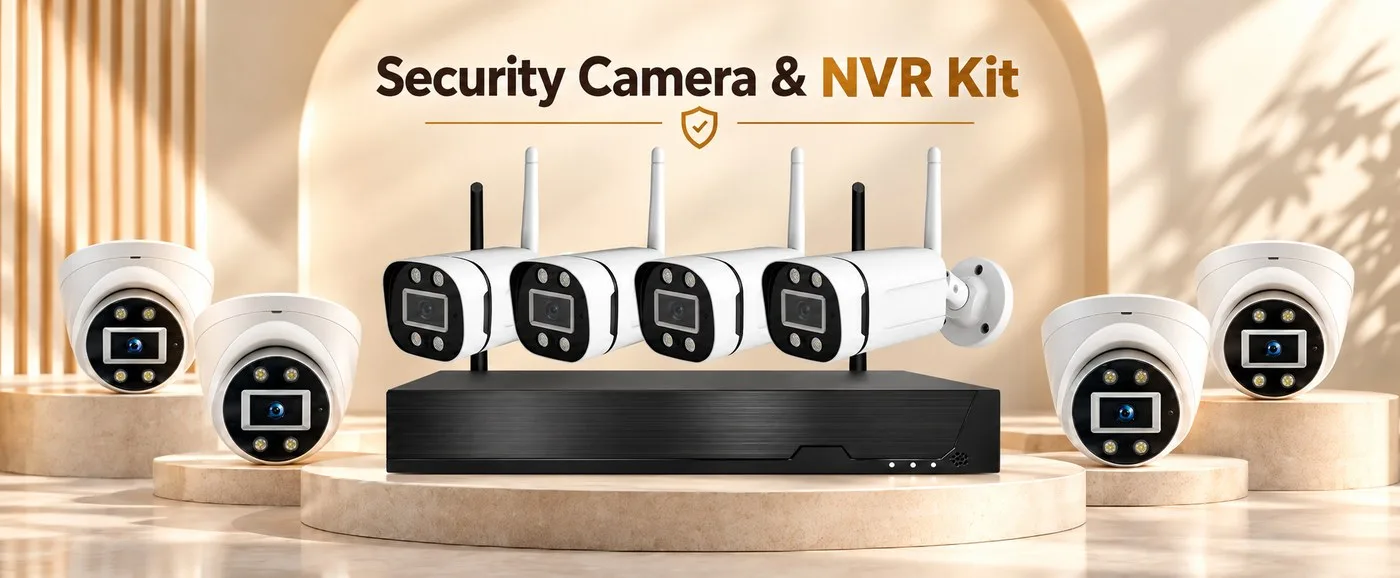
PoE cameras fail at the two least glamorous points: a termination that takes water after eighteen months, and a switch whose power budget was sized for the datasheet rather than for peak IR. Both are installation errors that arrive as product complaints.
3. Cost per installed unit, not cost per box
Sticker price comparison misleads because the three types carry different installation costs — and the installer, not you, pays them.
| Cost element | Battery | Solar | Wired (PoE) |
|---|---|---|---|
| Camera unit | Mid | Highest | Low to mid |
| Cable and connectors | None | None | Significant, per run |
| Switch / NVR capacity | None | None | Required, sized to ports and watts |
| Installer labour | Lowest | Low | Highest — often the largest single line |
| Recurring cost to end user | None (manual recharge) | SIM plan if 4G | None beyond existing network |
| Service visits over 3 years | One battery cycle | Panel cleaning | Rare, but expensive when cable fails |
Table 2 — If your channel is installer-led, the labour line decides the sale, not the camera price.
4. Accessory overlap decides your dead stock
| Accessory | Battery | Solar | Wired |
|---|---|---|---|
| Mounting bracket | Shared across the range | Often shared | Different (junction box) |
| Charging adapter / cable | Required | Rarely | Not applicable |
| External solar panel | Optional upgrade | Core component | Not applicable |
| PoE injector / switch | Not applicable | Not applicable | Required |
| Junction / weather box | Optional | Optional | Effectively mandatory |
Table 3 — Battery and solar ranges share brackets and packs; wired shares almost nothing with either.
The stocking rule that follows: build depth in one architecture family first, because its accessories and spares carry over between SKUs. Adding the third architecture before the first two are turning over is how a warehouse ends up with forty bracket boxes for a camera that was discontinued.
5. Channel fit
| Channel | Best first architecture | Why | What to avoid |
|---|---|---|---|
| Retail / DIY / e-commerce | Battery WiFi | Self-install, no tools, easy returns story | PoE kits — return rate driven by setup failure |
| Security installers | Wired PoE plus battery for retrofit | They sell reliability, and they bill the labour | Cheap solar with unproven charge behaviour |
| Agricultural / construction | 4G solar | No power, no network, no site visit budget | WiFi-only models |
| Property rental / Airbnb | Battery or 4G solar | Cannot drill or cannot rely on tenant WiFi | Anything needing a landlord's electrician |
| Project / tender | Wired PoE (NVR) | Spec compliance and central recording | Consumer app-centric models |
Table 4 — Match the architecture to how the buyer installs, not to what the buyer says they want.
6. What to verify on samples, by type
- Battery: real standby days with the shipping firmware, recharge time from empty, low-temperature charging protection, and whether the pack is field-replaceable without a technician.
- Solar: idle and event current draw, panel output at low irradiance, cable length supplied, and behaviour after four consecutive overcast days.
- Wired: actual power draw at IR-on peak, PoE class claimed versus measured, connector sealing method, and whether the NVR channel count matches the switch budget you plan to sell.
7. A starting mix we would recommend
For a distributor entering the category with a single container, we would rather see depth in two architectures than tokens in three:
| Position | Share of first order | Rationale |
|---|---|---|
| Battery WiFi, one hero SKU | 50% | Fastest sell-through, self-install, easiest to market |
| 4G solar, one hero SKU | 30% | Higher ticket, defensible against price comparison |
| Wired PoE, small trial lot | 20% | Opens installer conversations without stranding capital |
Table 5 — Depth in two families beats breadth across three.
Keep the trial lot genuinely small. Its purpose is to learn your installer channel's objections, not to fill a price list. Once a wired SKU reorders twice, it has earned a deeper position.
Frequently asked questions
Is a solar camera better than a battery camera?
Only where there is no reliable power and enough daylight. Solar removes the recharge chore and the seasonal battery swap; battery is cheaper, smaller and simpler where a socket or a ladder is available. Neither is universally better — the site decides.
Do battery cameras really last 180 days on one charge?
Standby figures assume a stated number of wake-ups per day and mild temperatures. Ask the factory for the assumptions behind the number, then halve it for a cold month with heavy event traffic. A listing that states the assumption converts better and returns less.
Can I mix architectures in one order to hit the MOQ?
Often yes, because MOQ is calculated per configuration rather than per container, but confirm it in writing. Mixing is also the cheapest way to test which architecture your channel actually installs.
Which type has the highest return rate?
Battery and solar units return on power complaints — standby shortfall, charging behaviour, ageing packs. Wired units return on installation faults — connectors, PoE budget, NVR configuration. The fix differs: firmware and documentation for the first, pre-terminated cables and clearer specs for the second.
What should a first-time distributor stock first?
A battery WiFi hero SKU plus a 4G solar hero SKU, then a small wired trial. That covers self-install, off-grid and installer channels with two accessory families instead of three.
Building a first order?
Tell us the channel you sell into and the sites your customers install on. We will propose a mix, the accessory list each SKU needs, and the MOQ per configuration.
Discuss your stock mix →Related reading: Solar camera buyer checklist · OEM vs ODM vs white label · Certification guide · All buying guides · Battery cameras