
OEM vs ODM vs White Label Security Cameras: Cost, MOQ and Certification Responsibility
A practical comparison of OEM, ODM and white label security camera sourcing — tooling ownership, certification responsibility by market, how MOQ is calculated and which model fits your volume.
Key Points for Buyers
- White label, ODM and OEM differ mainly in who owns tooling and who signs the certificate
- Certification responsibility follows the entity placing the product on the market
- MOQ is driven by SMT changeover, packaging print runs and per-SKU certification
- Typical timeline: 5-7 working days for samples, 20-30 days for mass production
- White label = you buy a finished product, put your logo on the box, and lean on the factory's existing certificates. Lowest cost, lowest control.
- ODM = you pick from the factory's mature platforms and change configuration, packaging and UI. Best balance of cost and differentiation for most importers.
- OEM = the product is built to your specification, usually with your tooling and your certification. Highest control, highest fixed cost, only sensible above a certain volume.
Most sourcing problems we see at the sample stage are not quality problems. They are model mismatches: a first-time importer orders full OEM with custom certification at 300 units, or a distributor with a ten-year brand expects white label to give them exclusivity. The product is fine; the commercial model does not fit the volume.
This guide breaks the three models down by the four things that actually decide the deal: who owns the tooling, who owns the certificate, how MOQ is calculated, and how long the timeline runs.
1. What each model actually means
White label
The factory already sells the product. You buy it, add your logo to the product and packaging, and resell it. The hardware, firmware and certification stay exactly as the factory defined them. Differentiation is limited to branding and the channel you sell through.
ODM (Original Design Manufacturer)
The factory designed the product and owns the platform, but you influence the configuration: battery capacity, solar panel size, Wi-Fi or 4G bands, lens options, memory, accessories, packaging, app name and UI language. You are not creating a new product, you are configuring an existing one into a version that fits your market.
OEM (Original Equipment Manufacturer)
The product is built to your specification. Enclosure, board layout, firmware behaviour and packaging follow your requirements, and in most contracts the tooling is paid for by you and belongs to you. This is the only model that gives you a product nobody else can sell.
2. Side-by-side comparison
| Dimension | White label | ODM | OEM |
|---|---|---|---|
| Who designs the hardware | Factory | Factory | Jointly, to your spec |
| Who owns the tooling | Factory | Factory | Usually the buyer |
| What you can change | Logo, packaging | Configuration, packaging, app/UI, accessories | Enclosure, board, firmware, packaging, certification |
| Exclusivity potential | Rare | Possible by market and configuration | Yes, if you own the design |
| Typical MOQ | Lowest | Medium | Highest |
| Fixed cost before production | Near zero | Low to medium | Highest (tooling, firmware, certification) |
| Who signs the certificate | Factory | Usually factory | Usually buyer |
| Time to first shipment | Shortest | Short to medium | Longest |
3. Where the money actually goes
Buyers usually compare quoted unit prices. That comparison is misleading, because the three models do not carry the same fixed costs. The real comparison is total cost of ownership for the SKU, which has four layers:
| Cost layer | White label | ODM | OEM |
|---|---|---|---|
| Tooling / moulds | — | Shared with factory | Paid by buyer, owned by buyer |
| Firmware / app customisation | — | Configuration-level | Development work, paid by buyer |
| Certification testing | Existing reports | Existing reports, occasional re-test for a new band or battery | New test reports per SKU and market |
| Packaging | Logo sticker or simple print | Custom print run | Custom print run plus structural design |
The pattern is consistent: white label and ODM push fixed cost into the factory's catalogue and recover it across everyone who buys that platform. OEM pulls the fixed cost onto your balance sheet, which is why the unit price looks better at high volume and worse at low volume.
4. Certification responsibility — the part that causes recalls
This is where OEM deals fail after the container has shipped. The rule is not "the factory handles certification". The rule is: the entity placing the product on the market is the entity responsible for compliance.
| Market | Requirement | Who normally signs in white label / ODM | Who normally signs in full OEM |
|---|---|---|---|
| United States | FCC (Part 15 for wireless), supplier's declaration of conformity | Factory holds the test report | Buyer, as the responsible party |
| European Union | CE marking, RED for radio, RoHS, EMC | Factory issues the declaration | Buyer issues the declaration |
| South Korea | KC mark, RRA registration | Factory supports with documents | Buyer or local importer registers |
| Thailand | NBTC type approval | Factory supports with documents | Buyer or local importer applies |
| Japan | TELEC (radio law) | Factory supports with documents | Buyer or local importer applies |
Two practical consequences:
- Certification is per SKU, not per factory. A new enclosure, a different radio module or a larger battery can each require a new test report. This is one of the reasons private-label MOQ exists.
- Ask for the document, not the claim. Request the actual test report PDF, the certificate holder's legal name, and the model number printed on it. If the model number does not match what you are buying, the report does not cover your product.
5. Why MOQ exists, and how it is actually calculated
MOQ is not a negotiating tactic. It is the point at which three fixed costs stop losing money:
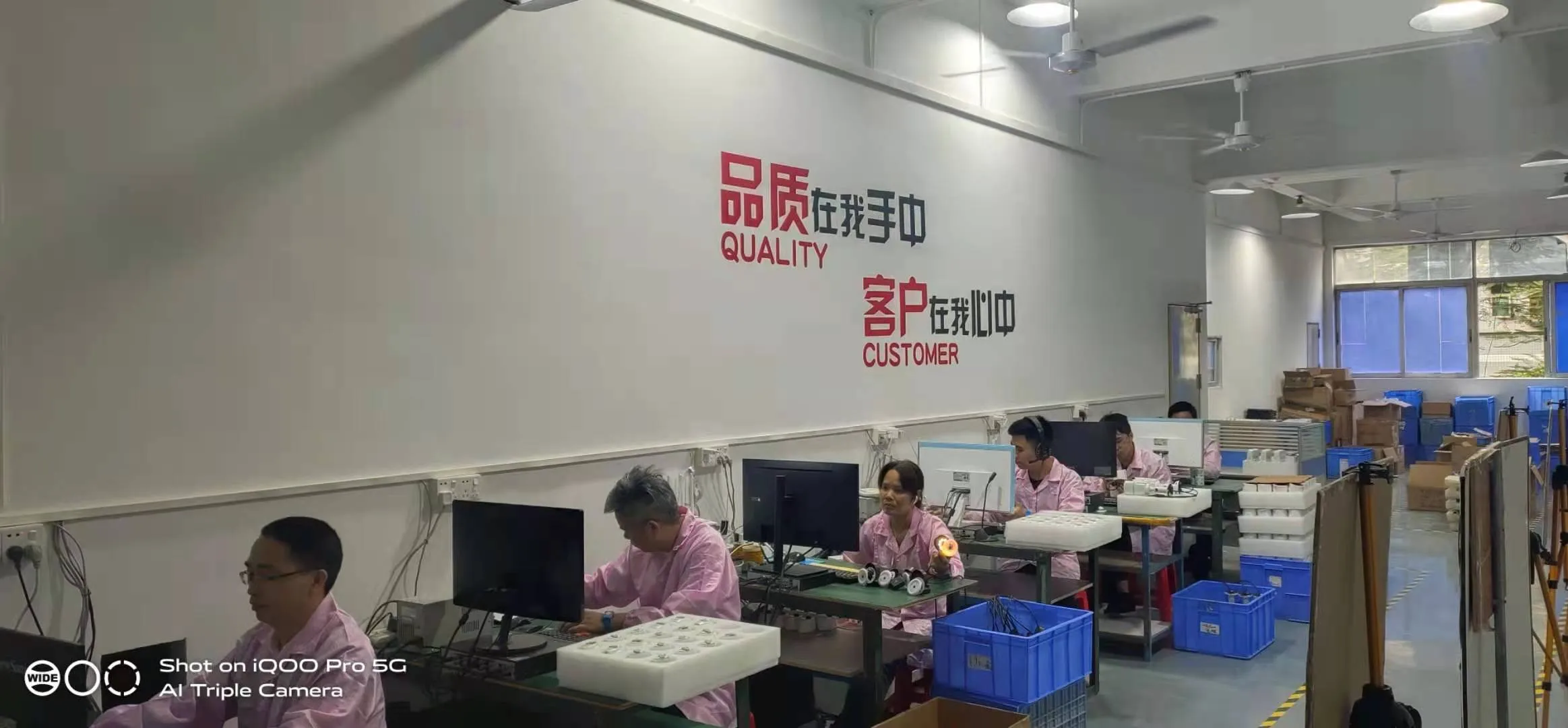
- SMT changeover. Loading a line for a specific board, programming the pick-and-place machines and running first-article inspection costs the same whether you build 200 units or 2,000. Below a certain quantity that setup is not recoverable.
- Packaging print runs. Custom boxes and manuals have their own minimum from the printer, and that minimum is usually higher than buyers expect.
- Testing and certification per SKU. Each new configuration needs functional testing, aging testing and — where the radio or battery changed — new certification.
In practice MOQ moves with three variables: the model, the degree of customisation, and whether the configuration already exists in the factory's catalogue. A configuration that already runs on the line has a much lower entry point than a new one, and that is the cheapest way to test a market.
6. Timeline: what to expect at each stage
| Stage | Typical duration | What slows it down |
|---|---|---|
| Sample / trial order | 5–7 working days | Non-stock configuration, new packaging artwork |
| Mass production | 20–30 days | Custom packaging, firmware changes, new certification |
| Certification (if new) | Varies by market and lab schedule | Lab queue, re-test after failure, local registration by the importer |
Projects that run late almost always lose time before production starts — in artwork approval, in firmware scope changes, or waiting for a lab slot. The production line itself is rarely the bottleneck.
7. Which model fits your situation
| Your situation | Recommended model | Why |
|---|---|---|
| First container, testing the market | White label or ODM on an existing configuration | Lowest fixed cost, shortest lead time, fastest feedback |
| Established distributor, competing on price and range | ODM with configuration and packaging changes | Differentiated enough to avoid direct price comparison |
| Private-label brand with a defined product idea | OEM | You need a product nobody else can list |
| Project / tender with a fixed specification | OEM or heavily configured ODM | Spec compliance matters more than unit price |
| Market where certification is strict (EU, KR, TH) | ODM first, then OEM once volume is proven | Certification cost per SKU dominates at low volume |
8. Red flags when comparing suppliers
- "We can do any MOQ." A factory that accepts 50 units of a custom SKU is either absorbing cost it will recover elsewhere, or will not deliver on time.
- No certificate holder name. If nobody can tell you which legal entity holds the test report, that report probably does not cover your product.
- Unit price with no fixed-cost breakdown. Tooling, firmware and certification should each be a separate line. A single blended number hides where the risk sits.
- No aging test in the process. Functional testing catches assembly errors. Aging testing catches the failures that show up in month three, in your customer's hands.
Frequently asked questions
Is OEM cheaper than ODM?
Per unit, at high volume, usually yes — because you stop paying for design work that is shared with other buyers. At low volume, almost never: tooling, firmware and new certification are fixed costs that only amortise across a large order.
Can I start with ODM and move to OEM later?
Yes, and it is the most common path. Start on an existing platform to validate the market, then invest in tooling and full certification once you have sell-through data. The configuration work you did in the ODM phase carries over.
Who pays for certification in an OEM project?
Normally the buyer, because in full OEM the buyer is usually the entity placing the product on the market and signing the declaration. The factory supplies samples, technical files and support through the test process.
How many units do I need before OEM makes sense?
It depends on tooling cost and how many markets you need certificates for, not on a fixed number. The right calculation is: (tooling + firmware + certification) ÷ your expected annual volume, compared against the per-unit premium of an ODM configuration.
Need a straight answer on your specific project?
Tell us the market, the volume and what you want to change. We will tell you which model fits — including when ODM is the cheaper answer.
Discuss your project →