
Dual-Lens vs Single-Lens Security Cameras: When the Extra Lens Pays Off (2026)
What a dual-lens security camera actually buys you in coverage, detail and installation, where a single lens plus PTZ is the better answer, and how to verify the claims on a sample.
Key Points for Buyers
- Dual lens means four different products; ask which one is quoted
- A second lens buys coverage or identification, not both automatically
- Two single cameras often cost less than one dual-lens unit
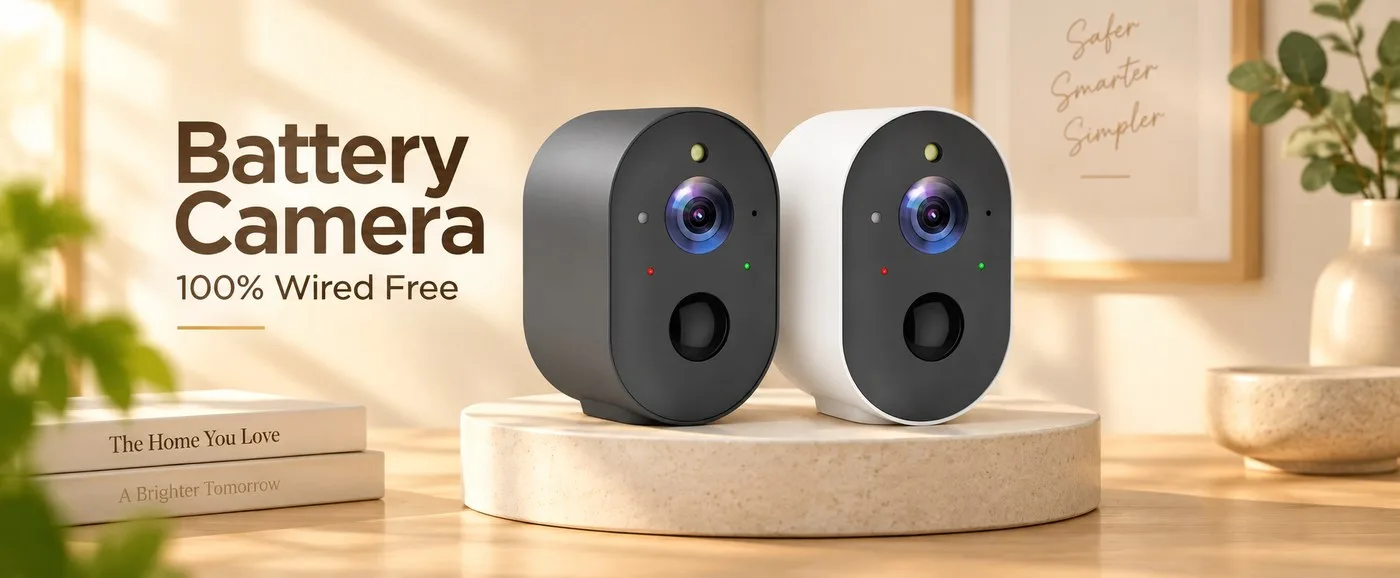
- On battery and solar models the second lens changes the power budget
- Verify time synchronisation and per-lens night performance on a sample
- A second lens buys coverage or detail — pick one. Wide plus telephoto covers more and identifies better; two wide lenses just widen the field.
- The gain is real where a single lens cannot be both. A driveway where you need the plate and the face is the classic case.
- It costs power, bandwidth and installation care. Two streams on a battery camera is not free.
- Often a single lens plus a PTZ beat two fixed lenses if the site needs tracking rather than two fixed views.
- Verify on a sample: synchronised playback, per-lens resolution under night IR, and whether both streams record locally.
Dual-lens cameras are sold on a simple promise: see wide and see far at the same time. That promise is real in a specific set of installations and marginal in others. The difference usually comes down to whether the site needs coverage or identification — and whether the deployment can carry two streams.
This guide is a buying framework: what each configuration actually delivers, where dual-lens earns its premium, and what to test before you commit.
1. What "dual lens" can mean
| Configuration | Typical pairing | What it buys | Where it fails |
|---|---|---|---|
| Wide + telephoto | Fixed wide plus fixed narrow | Scene context plus identification detail | Two fixed views; the subject must pass both |
| Dual wide (panorama) | Two overlapping wide lenses stitched | One continuous field of view without distortion edges | No extra identification at distance |
| Wide + PTZ | Fixed overview plus moving close-up | Coverage plus active tracking | PTZ can be looking the wrong way |
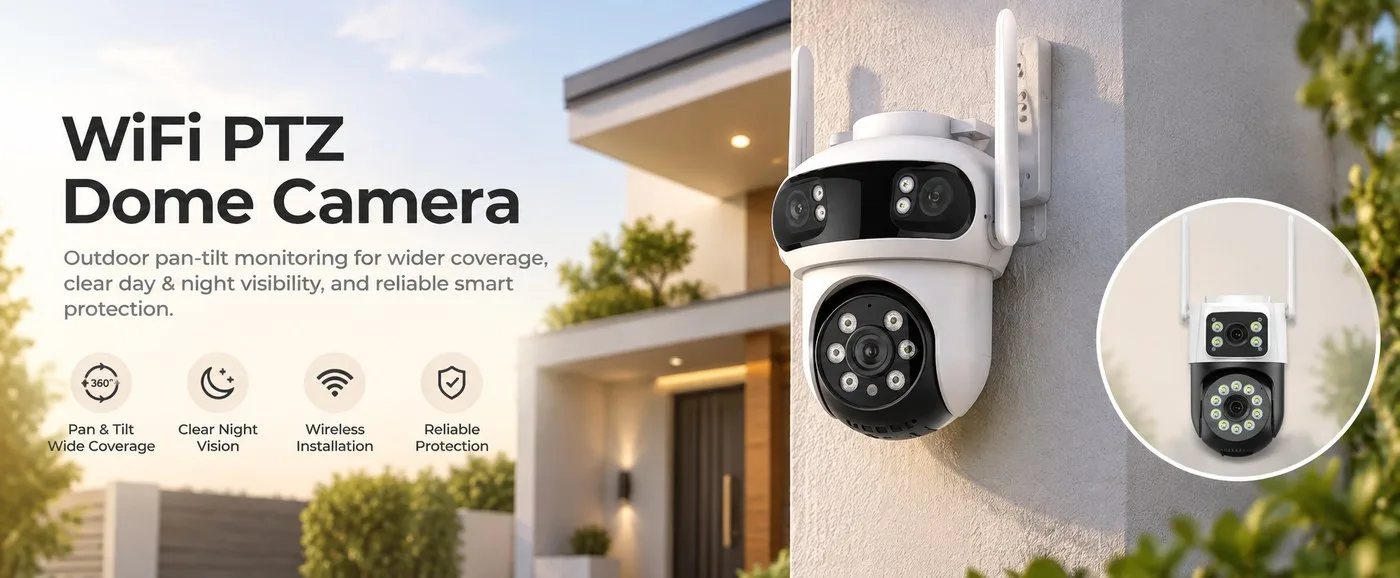
| Dual lens PTZ dome | Panorama plus zoom on one body | Overview and zoom in a single mount | Higher power draw and cost |
Table 1 — "Dual lens" describes four different products. Ask which one you are being quoted.
2. Coverage versus identification
The two goals pull in opposite directions. A wide lens sees the whole yard but renders a face at the gate small. A narrow lens identifies the face but shows nothing about the approach.
| Site need | Single lens can do it? | Dual lens worth it? |
|---|---|---|
| Watch a wide yard, alerts only | Yes, if alerts are the product | Marginal — you gain pixels, not insight |
| Read a plate at 15 m and see the approach | Not with one lens | Yes — this is the core use case |
| Track a person crossing a yard | Only with PTZ | Only if the second lens moves |
| Cover an L-shaped corner | No single view fits | Yes, or two separate cameras |
| Indoor room monitoring | Yes | No — cost without benefit |
Table 2 — Dual lens earns its premium where identification and context are both required at the same moment.
3. What it costs you in power and data
Two sensors and two encode streams change the power budget — which matters most on battery and solar models.
| Impact | Single lens | Dual lens |
|---|---|---|
| Idle draw | Lower | Higher if both sensors stay active |
| Event draw | One encoder | Two encoders, or one at reduced rate |
| Night IR | One illuminator array | Often two arrays, or shared with uneven coverage |
| Upload volume | One stream | Two streams unless events only |
| Local storage | One file per event | Two files, or a stitched file depending on design |
Table 3 — On a solar camera, dual lens can require a larger panel and battery, not just a higher price.
4. Six things to verify on a sample
- Are the streams time-synchronised? Play back an event and confirm the two views align to the second; otherwise evidence value drops.
- Per-lens night performance. Coverage at 10 m and identification at 25 m are different tests — measure both, after dark.
- Resolution claims. Check whether each sensor is the stated resolution, or one is downscaled.
- Recording behaviour. Confirm both streams land on the SD card, and what happens if one lens is blocked.
- Power draw in dual mode. Measure it; datasheets often quote single-lens figures.
- Mounting and aim. Two lenses mean one aim decision serves both. Check the bracket allows independent adjustment if needed.
5. When a single lens is the better buy
- Indoor and small-area monitoring — one lens already covers the room.
- Alert-driven deployments — the customer wants notification, not identification at 30 m.
- Battery budget is tight — dual lens may force a larger pack or panel.
- Two independent views are needed — two cameras usually serve better than one body facing one direction.
Frequently asked questions
Is a dual-lens camera better than a single-lens camera?
Only where the site needs both a wide view and identification detail at the same time — a driveway, a gate, a loading bay. For a room or a small yard, the second lens adds cost and power without adding information.
Do dual-lens cameras record both streams?
It depends on the model and firmware: some record both, some record the wide stream continuously and the telephoto only on events, and some stitch the two into one image. Confirm the behaviour on the exact model you are buying.
Can two single cameras replace a dual-lens unit?
Often yes, and with more flexibility in placement. The trade-off is two mounts, two power connections and two devices to manage — which is exactly what a dual-lens body is designed to avoid.
Do dual-lens cameras use more data on 4G?
Yes, if both streams upload. The practical approach on cellular is local recording of both streams with event clips uploaded from the relevant lens only.
What should I check first on a sample?
Night identification at your real distance, and whether the two views are time-synchronised. Those two checks separate a genuinely useful dual-lens product from a marketing one.
Choosing between single and dual lens?
Tell us the site and the distance you need to identify a person or a plate. We will say whether the second lens earns its power budget, and which configuration we would quote.
Compare lens options →Related reading: PIR vs AOV detection · 4G data plans · Multi-lens cameras · All buying guides